Guides › New South Wales › Inner West
Glebe
Victorian terraces and foreshore walks west of the city.
Why Glebe
Victorian terraces and the existing harbour foreshore give Glebe a rich combination of streetscape and open-water beauty. Glebe Point Road's shops, cafes and cultural life supply a real neighbourhood behind the scenic walk.
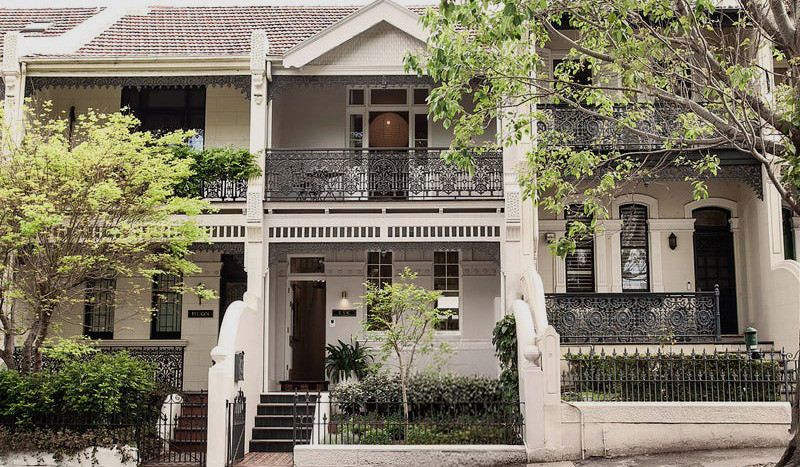
Victorian terraces in Glebe.

What’s on locally
The Local Calendar
Lovely weekends start here.
Markets, events and things to do near Glebe — checked by The Postcode. Scroll the What’s on list just below.
What’s on
Out and about near Glebe
Festivals, markets, shows and sport across the wider area, picked by The Postcode. Always check the official event page before you go.
Events coming soon
We’re putting together the local calendar and only list events we’ve checked with the organiser’s own page.
Got an event to share?
Add it to The Local Calendar — anyone can send one in. Every event is reviewed by The Postcode before it appears.
Glebe Point Road still does the work of a high street, running along the ridge of a peninsula of terrace streets, with the harbour foreshore opening at the point and the older church estates woven through the back streets.
Sources: Dictionary of Sydney — Glebe (Max Solling, 2011) · Dictionary of Sydney — Glebe Estate
Church land, terrace streets and a suburb that fought for itself
The suburb story
People love living in Glebe because the daily round is still on foot. Glebe Point Road is a genuine neighbourhood street of bookshops, a Saturday market, bakeries and a pub that has been in the same road since the nineteenth century, and the harbour edge at the point gives you water and sky after a few minutes’ walk. The streets behind are close and distinctive: long runs of terraces, a few surviving villas, and a grain that has been argued over, and saved, rather than erased.
The Dictionary of Sydney records this as Cadigal and Wangal country. In 1790 the tract was measured out as the Sydney Glebe lands, a 400-acre reserve to support a Church of England clergyman, as Governor Phillip’s instructions required. The first chaplain, Richard Johnson, found the heavily timbered reserve poor for cultivation and later wrote that it was “400 acres for which I would not give 400 pence.” He moved his farming interests elsewhere, and most of the reserve stayed unoccupied until the Church and School Corporation, needing income for the clergy, subdivided it into 27 allotments and auctioned most of them in 1828.
What followed was a suburb already split by topography. The larger, higher lots at Glebe Point attracted professional and mercantile families who wanted a view and better drainage; George Allen moved in 1831 to Toxteth House, a John Verge house on a 95-acre estate, complete with a spacious garden and, later, a private chapel. Down toward Blackwattle Swamp, smaller low-lying lots drew slaughterhouses, boiling-down works and a distillery, and the cheapest kind of housing. The 1828 boundaries, the Dictionary notes, have rigidly dictated the layout of the streets ever since.
The process of building up Glebe ran from 1841 to 1915, most intensively in the twenty years after 1871. From about 1870 the terrace became the dominant form, and by 1901 the suburb housed 19,220 people in 3,737 houses. The better-off began to leave for newer garden suburbs; the inner ring, including Glebe, became more industrial and working-class, especially after the plague year of 1900. It was a place of tight neighbourhoods, of Town Hall relief in the Depression — 39.5 per cent of Glebe’s male workforce was listed as unemployed in 1933 — and, later, of postwar migration that loosened the older Anglo-Celtic culture.
The character you walk through now was very nearly lost. On planning maps of the 1960s Glebe was coloured as a zone of blight, with expressway corridors drawn through its heart. The Glebe Society formed in 1969; by then the Department of Main Roads had already acquired 80 properties. Lyndhurst, the old mansion in Darghan Street, became a symbol of the fight. The Builders Labourers Federation, led by Jack Mundey, placed a green ban on the expressway, and after confrontations in 1972 the department withdrew from Glebe. In November 1974 the area was listed by the National Trust as a Conservation Area, in the highest category. The same year the Federal government acquired the Bishopthorpe and St Phillip’s estates from the Church of England — 723 dwellings and 27 commercial buildings — so that a tract of low-income housing could be rehabilitated rather than redeveloped. Gentrification was already under way, and it has continued, but the saved townscape is why Glebe still feels like itself: a peninsula of terrace streets, with a high street that works and a foreshore at the end of the road.
Story researched 11 November 2026. Sources: Dictionary of Sydney, Glebe, by Max Solling (2011); Dictionary of Sydney, Glebe Estate; and the official sites of the businesses named below.
Lifestyle
Life in Glebe
Community · 2037
Join the Glebe community
Moving here, or already a local? Connect with people nearby, find the groups that suit you, and get a warm welcome to the area.
- Connect with localsMeet neighbours and people like you.
- Local groupsSurf clubs, markets, runs and clubs, all in one place.
- New-to-the-area welcomeYour first month, sorted. See the guide.
01Living in Glebe
Daily life gathers on Glebe Point Road and in the terrace streets that run off it. The scale is walkable: a bookshop, a bakery, the Saturday market at the public school, and the harbour walk at the point. Housing is close and mixed, from small terraces to larger older houses, and the suburb is near the city without being the city itself.
Busy roads, especially Parramatta Road at the southern edge, and the lively evening life of the high street are part of the bargain. The suburb rewards a street-by-street look: pockets differ in scale, outlook and noise.
02Parks & the foreshore
The pleasure of Glebe is the combination of the ridge street and the water. The point looks out to the harbour; Foley Park sits opposite the original Sonoma shopfront on Glebe Point Road, a useful green pause in the middle of the street.
- Glebe Point RoadThe ridge high street, and the easiest way to understand the suburb’s shopfronts, terraces and daily rhythm.
- The harbour foreshore at Glebe PointThe water is the natural end of the peninsula, a short walk from the shops rather than a separate excursion.
03Cafés, shops & the high street
Most of the useful addresses sit on Glebe Point Road. Hours change, so check with each place before you go.
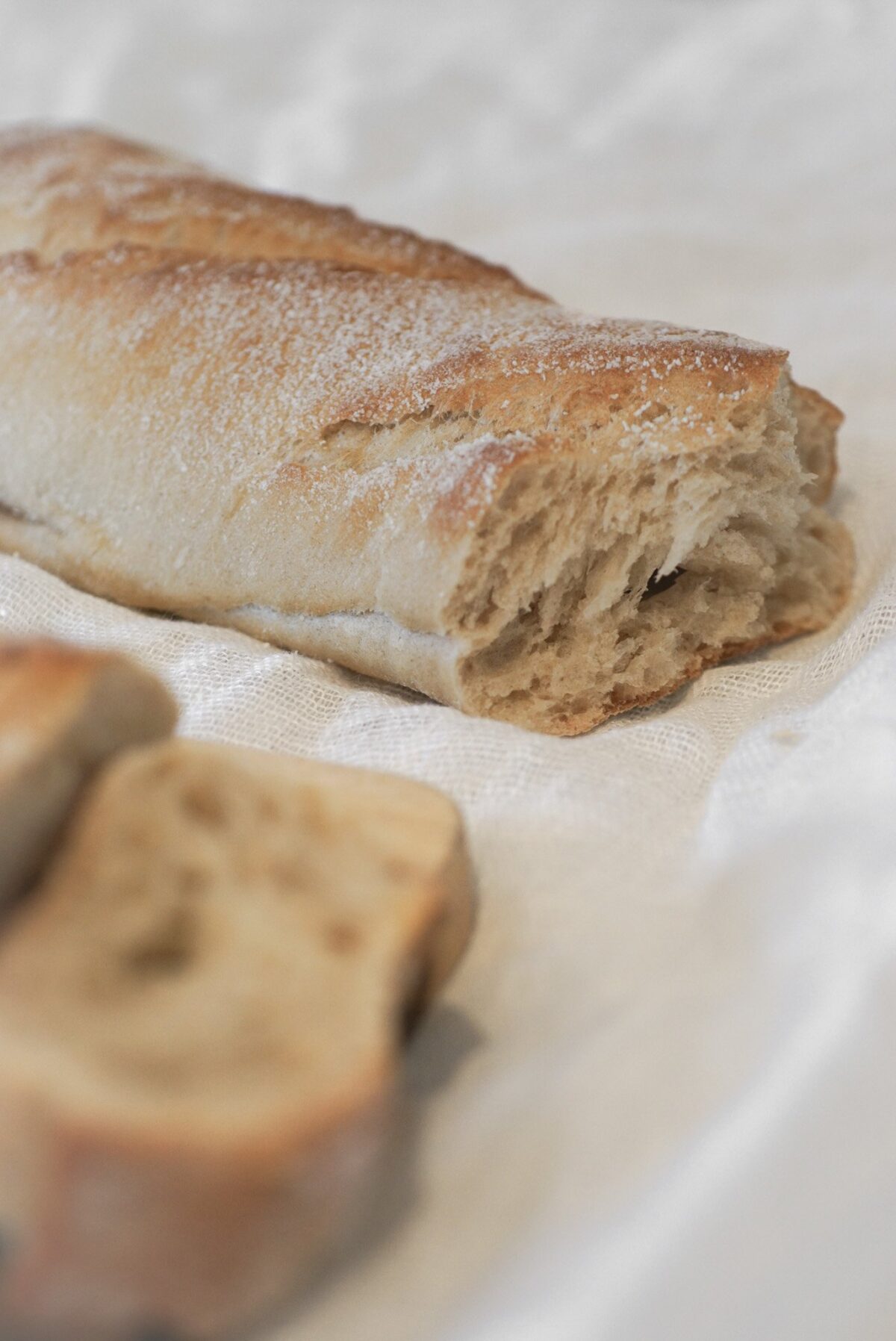
- SonomaA bakery and café at 215a Glebe Point Road, opposite Foley Park. This was the company’s first retail shop, opened in 2002. Open daily 7 am to 2:30 pm.
- Sappho Books, Cafe & BarA second-hand bookshop, café and bar at 51 Glebe Point Road, open every day, with a courtyard behind the shop and live music in the bar.
- GleebooksAn independent bookshop at 49 Glebe Point Road, open seven days from 9 am to 6 pm. The business has been bookselling for more than fifty years.
- Glebe MarketsHeld every Saturday from 10 am to 4 pm at Glebe Public School, 46–56 Glebe Point Road, with stalls for vintage clothes, local makers, produce and food.
- The ToxtethA pub at 345 Glebe Point Road, going since 1882, with a beer garden and courtyard, a dining room and a rooftop terrace.
04Schools
Glebe Public School and Forest Lodge Public School have long served the area. Public-school intake depends on the exact home address. Use the NSW School Finder, and contact any independent or Catholic school directly about enrolment.
School intake areas change. Check any address on the NSW School Finder.
05Getting around
Glebe is close to the city and is well served by buses along Glebe Point Road and Parramatta Road. The suburb itself is compact enough to walk. Plan trips, including any light-rail or train connection, with the Transport for NSW Trip Planner.
Property · 2037
Homes for sale in Glebe
Homes from every agency, side by side. Every home is labelled with its listing agency, and enquiries go straight to the agent.
No homes listed in Glebe yet
Listings open soon. Every licensed agency is welcome to list here, on the same terms. Each home will link straight to its listing agent.
Community · People like you
Life in Glebe, with the locals
Local clubs, groups & markets
Checked . Times change: check with the organiser before you go.
Guide checked . Places change: check opening hours before you go.