Guides › New South Wales › Inner West
Haberfield
Federation houses and Ramsay Street’s Italian village high street.
Why Haberfield
Federation houses and garden-suburb streets give Haberfield an unusually coherent architectural identity. Ramsay Street's Italian food and local shops make the heritage a lived-in village rather than a private-house display.
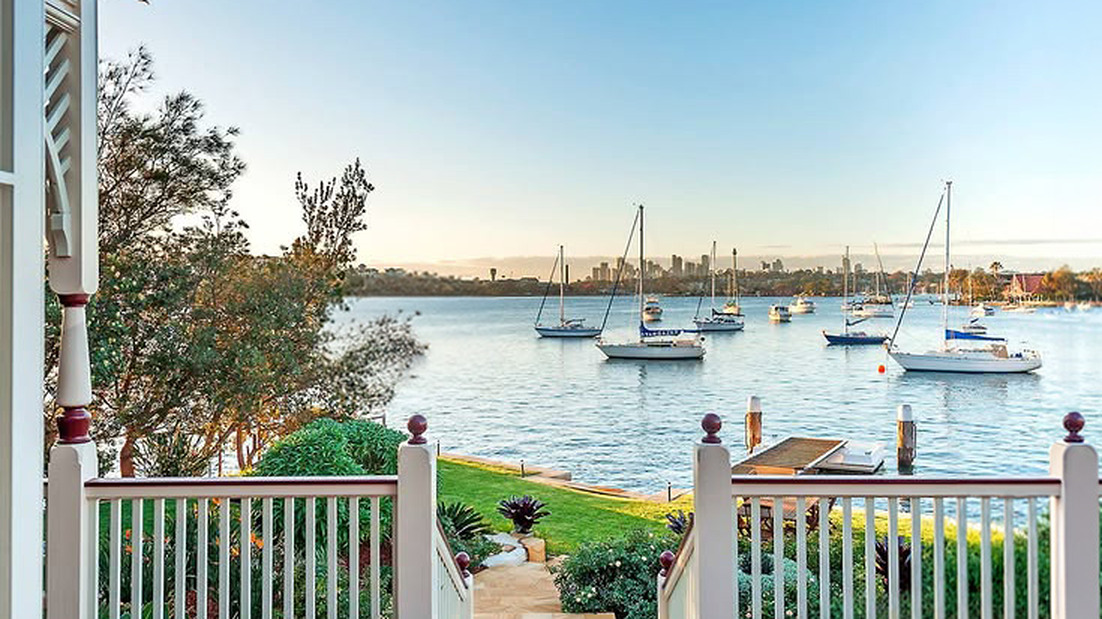
Haberfield by the water.

What’s on locally
The Local Calendar
Lovely weekends start here.
Markets, events and things to do near Haberfield — checked by The Postcode. Scroll the What’s on list just below.
What’s on
Out and about near Haberfield
Festivals, markets, shows and sport across the wider area, picked by The Postcode. Always check the official event page before you go.
Events coming soon
We’re putting together the local calendar and only list events we’ve checked with the organiser’s own page.
Got an event to share?
Add it to The Local Calendar — anyone can send one in. Every event is reviewed by The Postcode before it appears.
Haberfield is Australia’s first successful planned garden suburb, a Federation-era estate of single-storey houses, wide streets and a lived-in village along Ramsay Street.
Sources: Dictionary of Sydney, Sue Jackson-Stepowski, Haberfield (2008) · official sites of the businesses named below
A model suburb, “slumless, laneless and publess,” and a Ramsay Street village
The suburb story
People love living in Haberfield because the streets still read as a single idea: one house to a garden lot, brushbox trees, sandstone kerbs, and a short shopping strip on Ramsay Street that is part of everyday life, not a display. The Dictionary of Sydney places the suburb about five kilometres west of Sydney’s centre, looking across Hawthorne Canal to the denser streets of Leichhardt.
The Dictionary’s related entry for the former Ashfield local government area, of which Haberfield formed part, describes those lands as part of the traditional lands of the Eora people; that wording is at former LGA level, not a claim about this suburb’s boundary alone. In European land records, the peninsula jutting into Iron Cove was encompassed by the 1806 Sunning Hill grant of 480 acres to Ensign Nicholas Bayley. The Dictionary records that the land later passed to the emancipist Simeon Lord, who presented it as a dowry when his daughter Sarah married Dr David Ramsay in 1825, on condition that it be bequeathed only to the issue of that marriage. The estate was renamed Dobroyde; Ramsay pursued his botanical work there, and his wife’s long life meant the estate, also known locally as Ramsay’s Bush, escaped the boom and bust of the 1880s.
The suburb as a planned place begins with Richard Stanton. In 1901, at the time of Federation, he set out Australia’s first successful planned “model suburb,” embodying emerging garden-suburb principles and predating British examples such as Letchworth (1904) and Hampstead (1907). Stanton provided infrastructure — sandstone kerbs and gutters, brushbox street trees, buffalo-grass nature strips, sewerage, gas and electricity — and controls on setbacks, lot sizes, building lines and materials. Houses were individually designed by the company’s architect, John Spencer-Stansfield. The marketing slogan was “slumless, laneless and publess.” Street names commemorate members of the first federal cabinet, and Federation motifs appear in the house designs. St David’s church hall opened in 1862 and the church in 1868, on land that predates the estate; Stanton’s own house, The Bunyas, dates from 1906. From the mid-1970s, residents organised to protect the houses, and the Haberfield Development Control Plan became an exemplar for conservation-area management. The Dictionary also notes the Italian culinary influence on the Ramsay Street shopping strip, brought by postwar immigrants: the village is still the easiest way to understand the place, a garden suburb that kept a main street.
The bargain is the work of looking after older houses, and the main-road edges of the estate. The reward is a walkable village and a street pattern that has kept its Federation character in daily use.
Story researched 11 November 2026. Sources: Dictionary of Sydney, Sue Jackson-Stepowski, “Haberfield” (2008); and the official sites of the businesses named below.
Lifestyle
Life in Haberfield

Community · 2045
Join the Haberfield community
Moving here, or already a local? Connect with people nearby, find the groups that suit you, and get a warm welcome to the area.
- Connect with localsMeet neighbours and people like you.
- Local groupsSurf clubs, markets, runs and clubs, all in one place.
- New-to-the-area welcomeYour first month, sorted. See the guide.
01Living in Haberfield
Daily life gathers on Ramsay Street, a compact strip of Italian restaurants, a pasticceria and everyday shops, with the garden-suburb streets running out behind it. The houses are predominantly single-storey, on generous lots with consistent setbacks, so the walk to the shops is through gardens and street trees as much as along a commercial frontage.
The bargain is upkeep and the traffic on the edges. The reward is a village that is used every day, in a suburb planned as a whole in 1901 and still legible as one.
02Parks & places
- The garden-suburb streetsWide streets with brushbox trees, sandstone kerbs and nature strips, laid out as part of Stanton’s 1901 estate.
- Iron Cove and Hawthorne CanalThe water and the canal form the edges of the old peninsula, with Leichhardt across the canal.
- YasmarThe Ramsays’ colonial Georgian house of 1856, designed by John Bibb, on Parramatta Road, with its nineteenth-century garden — the Dictionary notes it as the only “gentleman’s villa” to survive along that road.
03Cafés & places to eat
Most of the useful addresses sit on Ramsay Street. Hours change, so check with each place before you go.
- Pasticceria Papa / Ristorante PapaA pasticceria and Italian restaurant at 145 Ramsay Street, with wood-fired pizza and homemade gelato. Open Wednesday to Sunday for breakfast, lunch and dinner.
- La DisfidaAn Italian restaurant at 109 Ramsay Street. Tuesday to Thursday 5pm to 9:15pm, Friday 5pm to 9:30pm, Saturday lunch 12pm to 3pm and dinner 5pm to 9:30pm, Sunday lunch 12pm to 3pm and dinner 5pm to 9pm; the official page notes that hours may vary.
- That’s AmoreA wood-fired pizza bar at 103 Ramsay Street. Tuesday to Thursday dinner 5:30pm to 9:30pm; Friday to Sunday dinner (the page lists both 5pm and 5:30pm starts, so check); Sunday lunch 12pm to 3pm; closed Monday.
- Vivere ItalianAn Italian restaurant at 78 Ramsay Street. Tuesday to Saturday 5:30pm to 9:30pm; Sunday 12pm to 2pm; Saturday lunch listed as closed except for functions. BYO wine, $10 a bottle.
- HappyfieldA café at 96 Ramsay Street, Haberfield NSW 2045, happyfield.com.au . Official standard hours Monday to Sunday, breakfast and lunch, 7:30am to 3:30pm. The official FAQ also records occasional one-off dinner events known as Happy Nights, which are not treated as standing dinner hours. Happy Shop by Happyfield, two doors down, is distinguished and is not listed here.
04Schools
Intake areas should be checked rather than assumed. Use the NSW School Finder for any address.
05Getting around
Buses serve Ramsay Street and the surrounding roads. There is no railway station in the suburb. Plan trips with the Transport for NSW Trip Planner.
Stanton marketed the estate as being within 30 minutes of the city by tram or ferry in 1901; current times vary, so use the Trip Planner.
Property · 2045
Homes for sale in Haberfield
Homes from every agency, side by side. Every home is labelled with its listing agency, and enquiries go straight to the agent.
No homes listed in Haberfield yet
Listings open soon. Every licensed agency is welcome to list here, on the same terms. Each home will link straight to its listing agent.
Community · People like you
Life in Haberfield, with the locals
Local clubs, groups & markets
Checked . Times change: check with the organiser before you go.
Guide checked . Places change: check opening hours before you go.