Guides › New South Wales › Sydney City & Inner East
Darlinghurst
Terrace streets and Oxford Street culture on the city’s edge.
Why Darlinghurst
Historic terraces and Oxford Street's cultural history give Darlinghurst a particularly strong inner-city identity. Independent food, galleries and nearby city connections make it an exceptionally rich everyday urban neighbourhood.
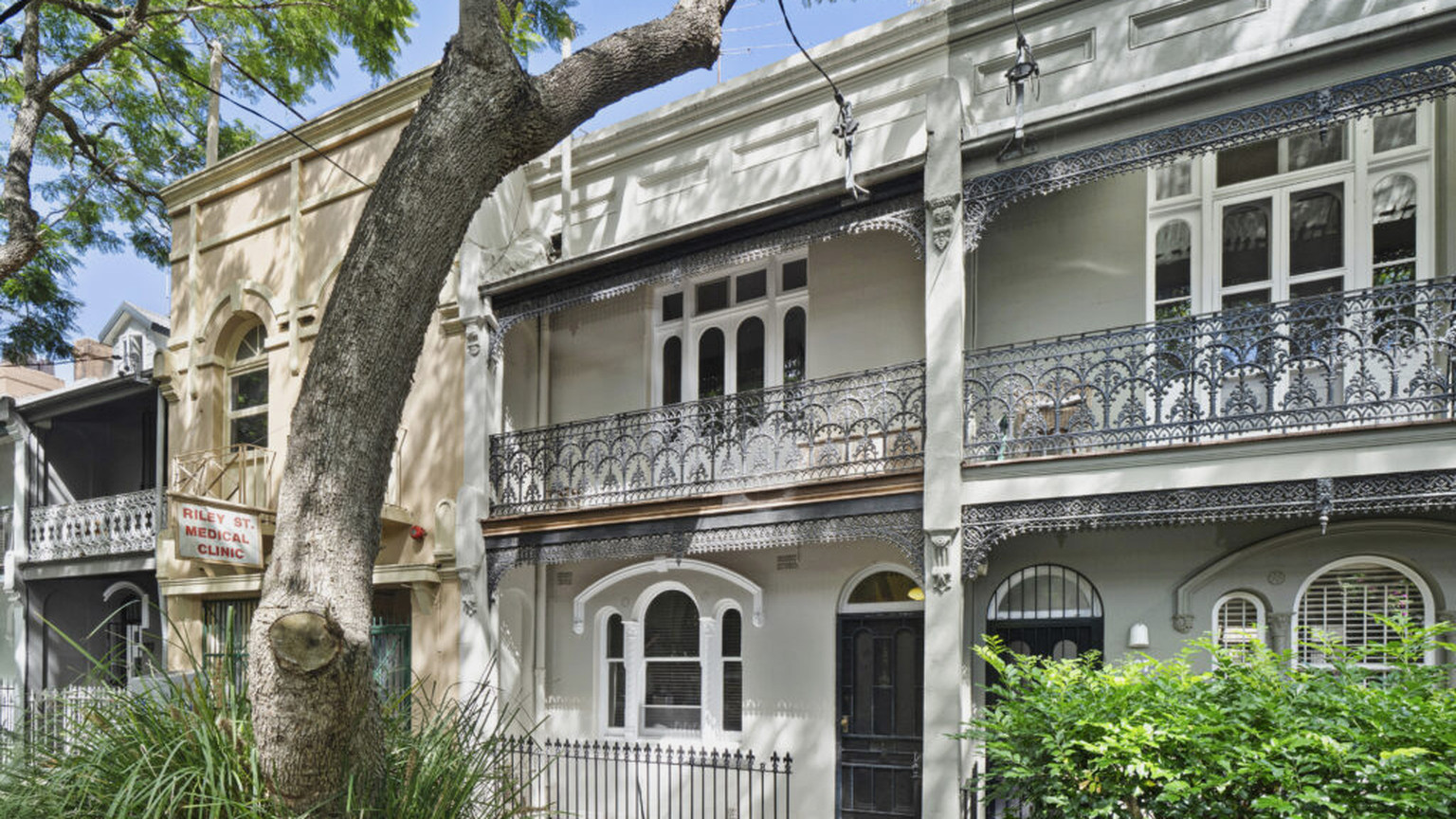
Terraces of Darlinghurst.

What’s on locally
The Local Calendar
Lovely weekends start here.
Markets, events and things to do near Darlinghurst — checked by The Postcode. Scroll the What’s on list just below.
What’s on · Sydney City & Inner East
Out and about near Darlinghurst
Festivals, markets, shows and sport across the wider Sydney City & Inner East area, picked by The Postcode. Always check the official event page before you go.
Dates checked 21 November 2026 from each event’s official page. More at the Sydney City & Inner East what’s on guide.
Got an event to share?
Add it to The Local Calendar — anyone can send one in. Every event is reviewed by The Postcode before it appears.
Darlinghurst sits on the ridge east of the city, a suburb of terrace streets between William Street and Oxford Street, with Victoria Street running along the height. The National Art School occupies the old gaol, and the daily round is still lived at street level: bakeries, a long-standing Italian café, and the shops and bars of Oxford Street.
Sources: Dictionary of Sydney — Darlinghurst (Mark Dunn, 2011) · official sites of the businesses named below
A ridge of villas, a valley of terraces, and a suburb that kept its nerve
The suburb story
The city is at the door, and the streets still feel like a neighbourhood. Victoria Street carries the everyday traffic of coffee and lunch; Oxford Street holds the evening life; and the terrace rows, climbing from the old valley up to the ridge, give the suburb a grain you can walk in an afternoon. The National Art School, in the former Darlinghurst Gaol, is a reminder that some of the heaviest public buildings in colonial Sydney were set on this fringe, and that the place has been remade more than once without quite losing its tightness of street and stone.
The Dictionary of Sydney records this as Gadigal country. Gadigal people continued to visit and use the place into the 1840s, as European settlement took hold. The ridge was first known to the colonists as Woolloomooloo Heights, or sometimes Eastern Hill. Governor Ralph Darling bestowed the name Darlinghurst in the late 1820s, thought to be in honour of his wife, Eliza Darling. Between 1828 and 1831 he issued seventeen grants along the ridge, from what is now Surrey Street and Tewkesbury Avenue north to the end of Potts Point, and he set conditions meant to produce a line of fine villas: plans had to be approved, houses had to be worth £1,000 or more, and each allotment was to hold a single residence in a landscaped garden, facing the town where possible. Of the seventeen villas, four stood south of what became William Street, inside today's Darlinghurst: Barham, designed by John Verge for Edward Deas Thomson, which survives in the grounds of SCEGGS; Craigend, designed and built for Surveyor General Sir Thomas Mitchell; Rose Hall, built for Ambrose Hallen; and Rosebank, built for James Laidley.
The idyll did not last. By the mid-1840s the colony was in recession, the one-house rule was challenged, and subdivisions began: Mitchell was selling part of his estate as early as 1837. William Street opened to traffic in 1840, cutting across the Woolloomooloo valley and up the steepest part of the ridge, and it became the future boundary with Kings Cross. In the valley, smaller lots filled with terrace rows for workers, artisans and labourers; by the mid-1880s most of the land below the cliffs south of William Street was built out. On the heights the villas held on into the 1880s, then many of the larger houses became boarding houses from the 1890s. Flats appeared from the early 1920s around the Kings Cross edge, but terraces remain the dominant dwelling type.
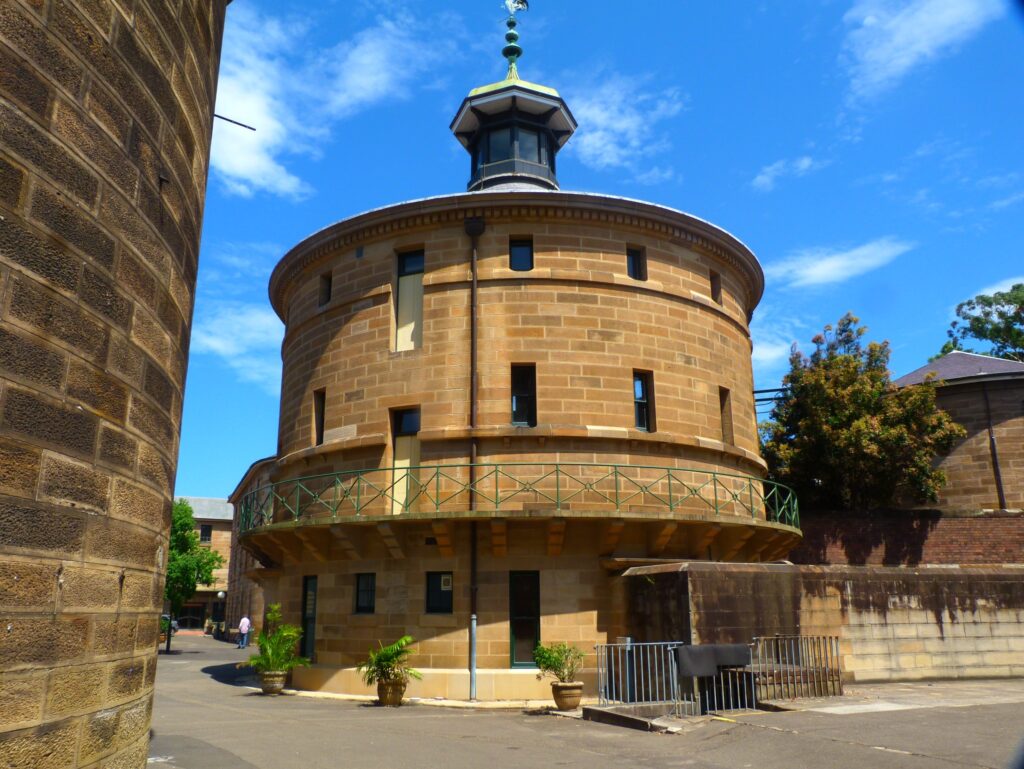
Public institutions marked the fringe. Darlinghurst Gaol was begun in 1822 and completed in 1841, when prisoners were marched from the old city gaol along South Head Road, later Oxford Street. The courthouse on the same site was built between 1835 and 1844. Public hangings were held at the front of the gaol until they were moved inside in 1853. The gaol closed in 1912; a technical college opened in the buildings in 1921, and they are now the National Art School. St Vincent's Hospital, founded by the Sisters of Charity, moved to a purpose-built hospital at the Darlinghurst end of Victoria Street in 1870. Oxford Street was reconstructed and widened from 1907; the original Sacred Heart Church, in the way of the widening, was demolished in 1910 and rebuilt by 1912.
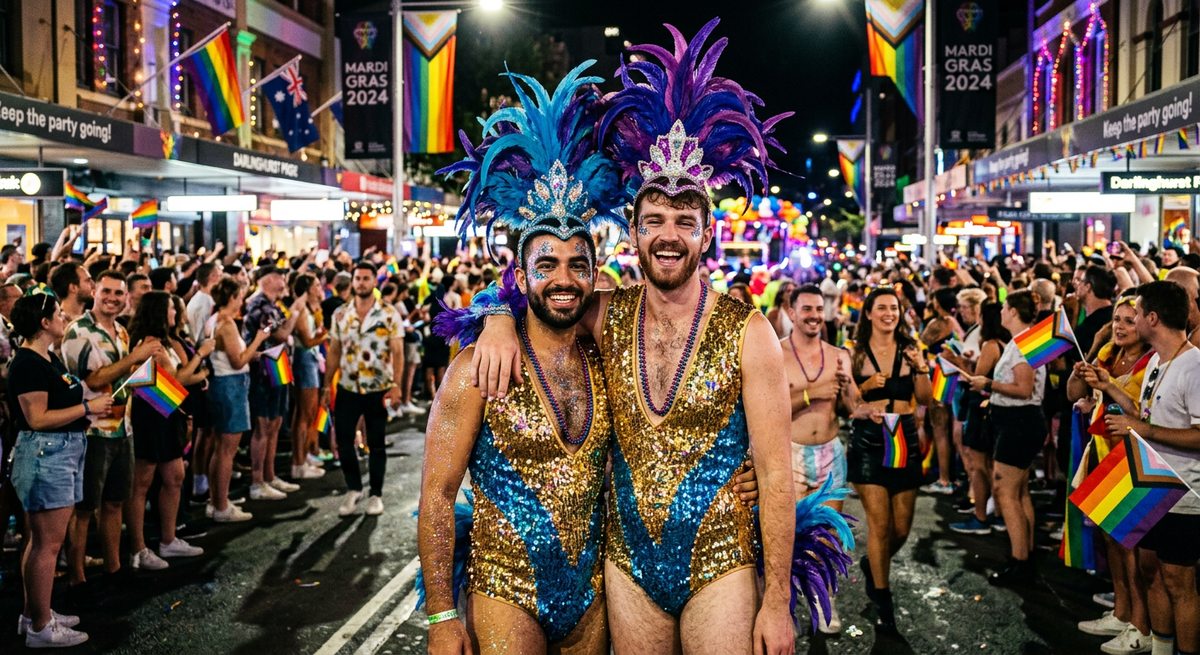
The suburb has always held more than one Sydney at once. Stanley Street became a hub of Italian and Maltese life; Sydney's first pasta factory opened there in 1904, run by Luciano and Carolina Rizzo. In the 1920s and 1930s the tabloid press named the place Razorhurst, after gang conflicts fought with cut-throat razors. From the 1960s, terrace houses once written off were repaired and restored. From the 1970s the area also became a safer and more open place for Sydney's gay community. On 24 June 1978, a parade along Oxford Street — the first Mardi Gras — was met by police, and 54 people were arrested. The festival that grew from that night is now one of the city's great annual gatherings, still centred on Darlinghurst. The nickname, Darlo, has stuck.
Story researched 11 November 2026. Sources: Dictionary of Sydney, Darlinghurst, by Mark Dunn (2011); and the official sites of the businesses named below.
Lifestyle
Life in Darlinghurst
Community · 2010
Join the Darlinghurst community
Moving here, or already a local? Connect with people nearby, find the groups that suit you, and get a warm welcome to the area.
- Connect with localsMeet neighbours and people like you.
- Local groupsSurf clubs, markets, runs and clubs, all in one place.
- New-to-the-area welcomeYour first month, sorted. See the guide.
01Living in Darlinghurst
Daily life gathers on Victoria Street and Oxford Street, and in the terrace streets that drop away from the ridge. The scale is walkable: a bakery, a long-running café, and the old gaol walls of the National Art School. Housing is mostly terrace rows, with apartment buildings closer to the Kings Cross edge and along the wider roads.
The bargain is inner-city intensity. William Street and Oxford Street are busy, and the night-time life of the Cross and Oxford Street is part of the setting. The suburb rewards a street-by-street look: the ridge and the old valley still feel like different places, as they have since the first villas were built on the height.
02Parks & places
The National Art School occupies the former Darlinghurst Gaol, begun in 1822 and completed in 1841, on the Oxford Street edge of the suburb. Hyde Park and the Australian Museum sit on the western edge, at the city threshold: the museum was started in 1846 and opened to the public in 1857.
- National Art SchoolIn the former Darlinghurst Gaol, begun in 1822 and completed in 1841.
- Hyde Park and the Australian MuseumOn the western edge, at the city threshold. The museum opened to the public in 1857.
- Oxford StreetThe old South Head Road, widened from 1907, and still the suburb's southern high street.
03Cafés, bakeries & places to eat
Victoria Street, Oxford Street and the terrace streets just off them hold most of the useful addresses. Hours change, so check with each place before you go.
- Tropicana CaffeAn Italian café and restaurant at 227 Victoria Street, in the same room since 1980. Breakfast Wednesday to Sunday from 7am; Monday and Tuesday from 12pm. In 1993 the first Tropfest packed the rooms, and the festival took its name from the café.
- Darlo DeliA deli and sandwich shop at 277 Victoria Street. Monday to Friday 6:30am to 4pm, Saturday 7am to 3pm.
- Una'sContinental cooking at 340 Victoria Street, serving schnitzel, goulash and strudel since 1970. Open 10am to 9pm, seven days; walk-in only.
- Tenacious BakehouseA bakery at 101 Oxford Street, open every day 8am to 3:30pm.
- MalabarAn Indian restaurant at 274 Victoria Street, officially in Darlinghurst since 2003. Official lunch hours are Wednesday to Sunday 12pm to 2:15pm. Official dinner hours are Sunday to Thursday 5:30pm to 9:45pm, and Friday and Saturday 5:30pm to 10:15pm.
- South Dowling SandwichesThe original shop at 377 South Dowling Street, open Monday to Saturday 8am to 3.15pm; closed Sunday. See southdowling.com.au.
- A.P Bread & WineIn a heritage sandstone cottage at 32 Burton Street, with the bakery's usual bread and pastry, plus breakfast and lunch, and wine from 12pm. Official hours are 7.30am to 3pm, seven days. See apbakery.com.au.
04Schools
SCEGGS Darlinghurst has occupied Barham, the John Verge villa in Forbes Street, since 1901. Public-school intake depends on the exact home address. Use the NSW School Finder, and contact any independent or Catholic school directly for enrolments.
- SCEGGS DarlinghurstAn independent girls' school at the John Verge villa Barham, in Forbes Street, since 1901.
School intake areas change. Check any address on the NSW School Finder.
05Getting around
Darlinghurst is hard against the city, with buses along Oxford Street and William Street. The suburb itself is compact enough to walk. Plan trips, including any train connection, with the Transport for NSW Trip Planner.
06Places to stay
An 18-room boutique hotel at 267 Darlinghurst Road, in a heritage building in the middle of Darlinghurst.
medusa.com.au ↗Property · 2010
Homes for sale in Darlinghurst
Homes from every agency, side by side. Every home is labelled with its listing agency, and enquiries go straight to the agent.
No homes listed in Darlinghurst yet
Listings open soon. Every licensed agency is welcome to list here, on the same terms. Each home will link straight to its listing agent.
Community · People like you
Life in Darlinghurst, with the locals
Local clubs, groups & markets
Checked 2026-11-26. Times change: check with the organiser before you go.
Guide checked 2026-11-26. Places change: check opening hours before you go.