Guides › New South Wales › Lower North Shore
Kirribilli
Jacaranda streets and harbour reserves beside the bridge.
Why Kirribilli
Jacaranda streets, stone houses and Art Deco apartments sit beside harbour-edge reserves in a compact historic village. Local shops and community facilities give the postcard setting an everyday rhythm, rather than leaving it as scenery without a neighbourhood.
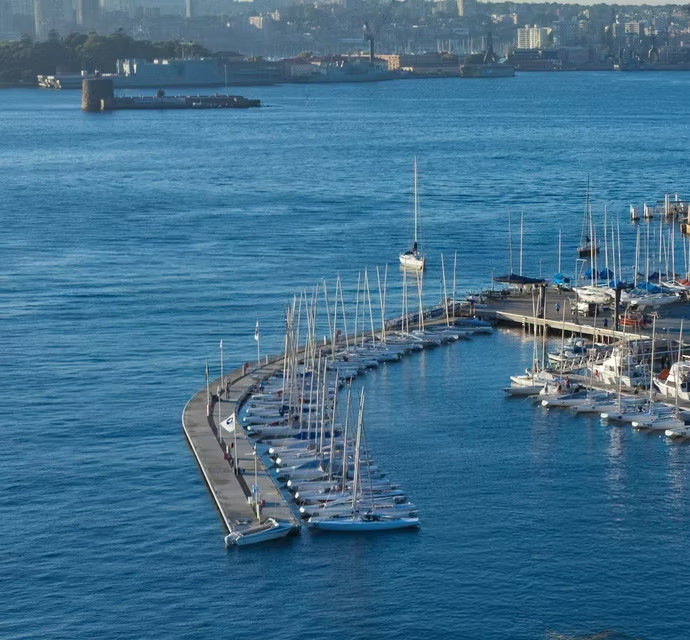
The marina at Kirribilli in late light.

What’s on locally
The Local Calendar
Lovely weekends start here.
Markets, events and things to do near Kirribilli — checked by The Postcode. Scroll the What’s on list just below.
What’s on
Out and about near Kirribilli
Festivals, markets, shows and sport across the wider area, picked by The Postcode. Always check the official event page before you go.
Events coming soon
We’re putting together the local calendar and only list events we’ve checked with the organiser’s own page.
Got an event to share?
Add it to The Local Calendar — anyone can send one in. Every event is reviewed by The Postcode before it appears.
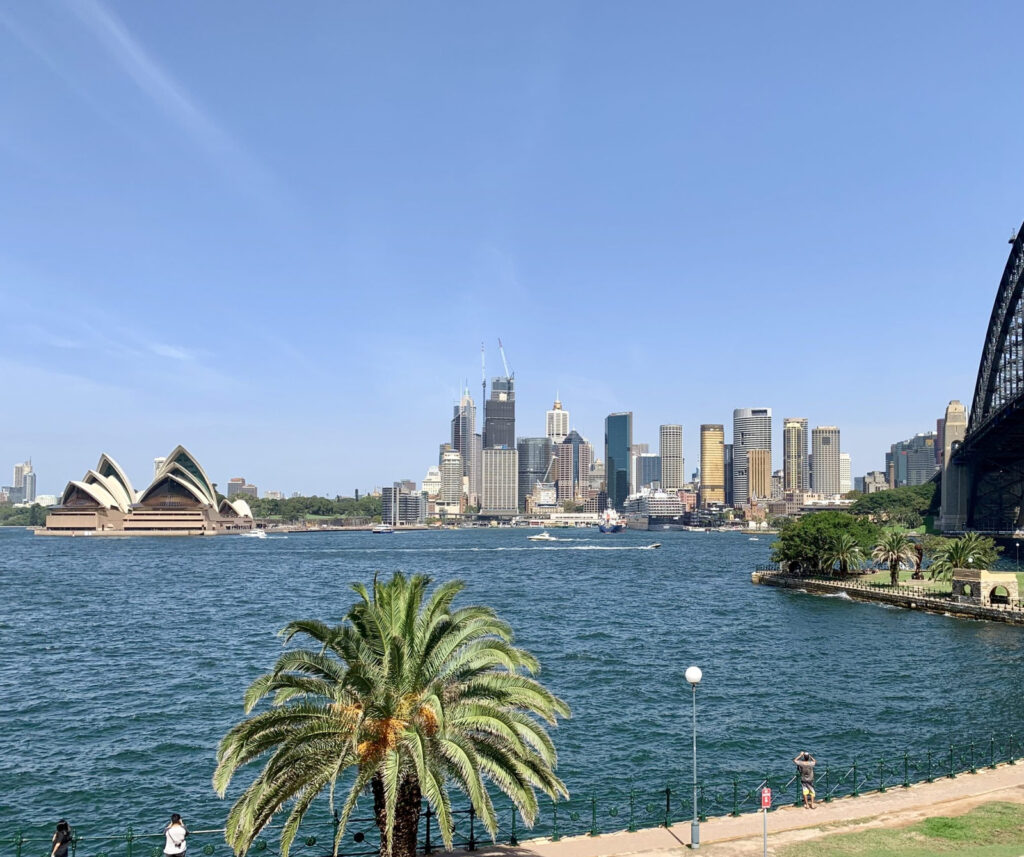
Jacaranda streets and stone houses sit on the headland directly opposite the Opera House, with a small village of shops on Broughton Street and the harbour so close it feels like a neighbour.
Sources: Dictionary of Sydney — Kirribilli · Governor-General — Admiralty House · North Sydney Council — Kirribilli history walk
A good fishing point under the bridge
The suburb story
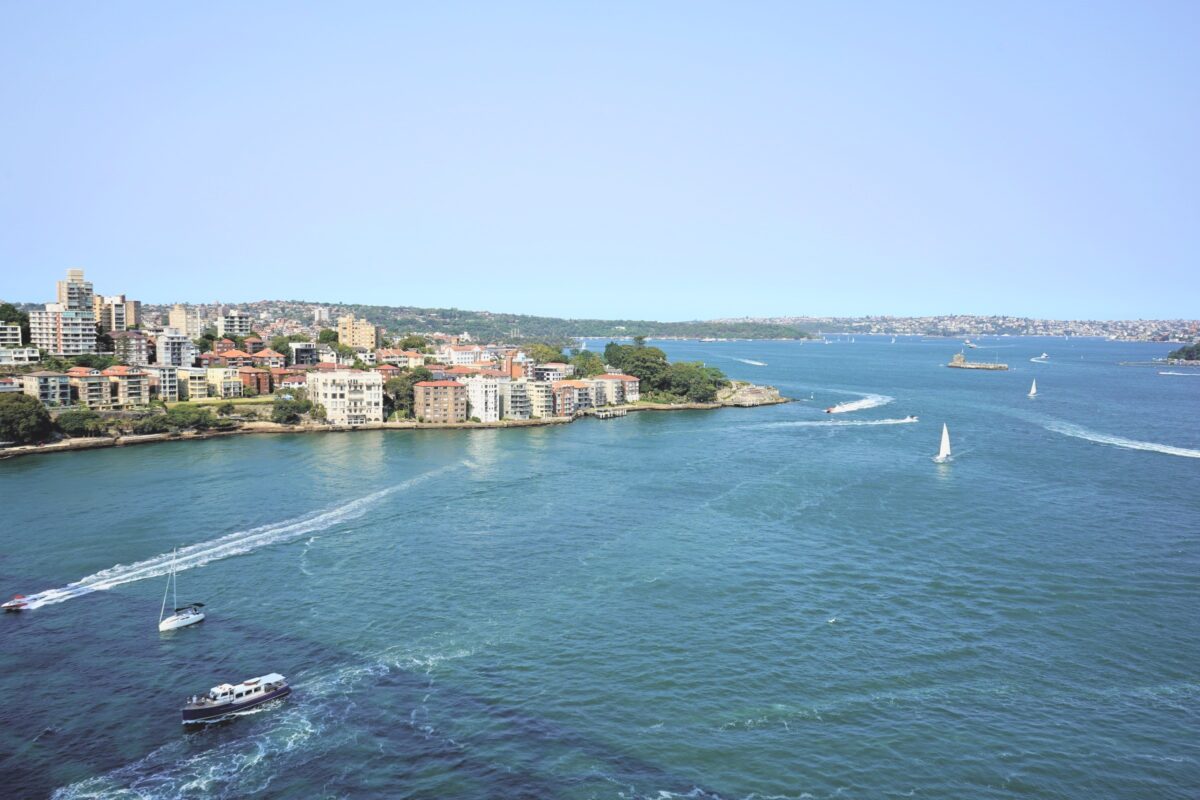
People love living in Kirribilli because the harbour is at the end of the street and the village is small enough to know. The suburb occupies the headland facing Sydney Cove, adjoining Milsons Point under the Bridge and wrapping east around to Careening Cove. Stone houses, terrace rows and later Art Deco apartment buildings share the slope with a handful of harbourside reserves. Broughton Street does the everyday work — a café, a pub, a few shops — so the postcard setting has a neighbourhood attached to it.
This is Cammeraygal land. The Dictionary of Sydney says the name probably comes from the word kiarabilli, a reference to a good fishing spot, though another theory ties it to “Carabella,” a house name used by the early settler James Milson. In 1794 a grant went to the freed convict Samuel Lightfoot, almost certainly without consultation with the Cammeraygal people then still living here. James Milson became the first European to settle permanently, leasing the land around 1822 and supplying ships with provisions, water and ballast. A Russian expedition in the 1820s still encountered Aboriginal people in a clearing at Kirribilli, feasting and dancing; the Dictionary of Sydney suggests this may have been the group around Bungaree.
Marine villas went up in the late 1830s and early 1840s, sandstone houses in the picturesque taste of the time. One of them, Wotonga, later became Admiralty House. The official history from the Governor-General’s office records that it was built in the mid-1800s by John George Nathaniel Gibbes, Collector of Customs, renamed Admiralty House in 1885 when the colonial government bought it for the Admiral of the Royal Navy’s Australian Squadron, and handed to the Commonwealth in October 1913 as the Governor-General’s Sydney residence. Next door, Kirribilli House was built by the trader Adolph Feez soon after 1854, acquired by the Commonwealth in 1920, and has been the Prime Minister’s Sydney residence since 1958. The two houses occupy the point, but they do not exhaust the suburb: away from the water, smaller cottages and terraces for local workers still stand in McDougall, Hipwood and Willoughby streets.
Regular ferry service arrived with the North Shore Steam Ferry Company in 1861, and the suburb grew as a place from which you could live beside the harbour and work in the city. Apartment buildings followed in the early twentieth century, often on the sites of older mansions. The Sydney Harbour Bridge, finished in 1932, changed the western edge. After the war, Greenway Flats — designed by Morrow and Gordon, begun in 1948 and opened in 1954 — became, at the time, the largest public housing flat development in the country, on land left over from the Bridge works. They are still public housing. Loreto Kirribilli, founded by the Loreto Sisters in 1907 in the old Milson family home Elamang, occupies a large campus overlooking Careening Cove. The Ensemble Theatre has been in a harbourside boatshed since 1960. Dense housing, event days on the harbour and the difficulty of parking are real constraints. They are also why the place still feels like a village rather than a lookout with no one at home.
Story researched 11 November 2026. Sources: Dictionary of Sydney entry for Kirribilli (Ian Hoskins, 2008); official Admiralty House history from the Governor-General’s office; North Sydney Council’s Kirribilli history walk; and the official sites of the businesses named below. Kirribilli House dates follow the Dictionary of Sydney.
Lifestyle
Life in Kirribilli
Community · 2061
Join the Kirribilli community
Moving here, or already a local? Connect with people nearby, find the groups that suit you, and get a warm welcome to the area.
- Connect with localsMeet neighbours and people like you.
- Local groupsSurf clubs, markets, runs and clubs, all in one place.
- New-to-the-area welcomeYour first month, sorted. See the guide.
01Living in Kirribilli
A weekday can be as simple as a walk down to the ferry and back up to Broughton Street for coffee. The streets are steep, the lots are tight, and the views — when you get them — are of the Opera House, the Bridge and the city, which is both an everyday pleasure and the reason the headland is never entirely quiet.
Milsons Point station and the Bridge approaches sit immediately to the west, so the city is very close. That convenience comes with traffic and with visitors who have come to see the same water you live beside.
02Foreshores & lookouts
The headland is small, so the public edges matter. Reserves and lookouts give you the harbour without needing a private frontage.
- The Kirribilli foreshoreThe public harbour edge, with Admiralty House and Kirribilli House occupying the point itself.
- Mary Booth LookoutA pocket park created in 1961, named for the physician and reformer Mary Booth.
- Careening CoveThe inlet to the east, once used for scraping ships’ hulls, now a mix of park, boatsheds and the Ensemble Theatre.
03Cafés & places to eat
Broughton Street is the village, with more useful addresses on Fitzroy Street and Willoughby Street, in Kirribilli itself. Hours change, so check with each place before you go. Milsons Point is distinguished.
- BacariA neighbourhood Italian restaurant and wine bar at 1/3 Broughton Street, open for breakfast, lunch and dinner (Sunday dinner is closed).
- Kirribilli HotelThe local pub at 37 Broughton Street, with a dining room and a terrace; bistro hours are listed on the hotel’s own site.
- BloomingalesA café and florist at 45A Broughton Street, Kirribilli NSW, bloomingales.com.au. Official opening hours Monday to Friday 6:30am to 2:00pm, Saturday 7:00am to 2:00pm and Sunday 8:00am to 2:00pm; not open on public holidays, on the official café page.
- Pasture of KirribilliA restaurant at 31A Fitzroy Street, Kirribilli NSW 2061, pastureofkirribilli.com.au. Official hours on the homepage are Monday to Wednesday 7:00am to 4:00pm, Thursday and Friday 7:00am to 10:00pm, Saturday 7:30am to 10:00pm and Sunday 7:30am to 4:00pm. Official LocalBusiness JSON-LD on the same page lists Monday to Wednesday 7:00am to 4:00pm, Thursday to Saturday 7:00am to 10:00pm and Sunday 8:00am to 6:00pm. Both official wordings are recorded.
- The BotanistA restaurant and bar at 17 Willoughby Street, Kirribilli, thebotanist.com.au. Official trading times Monday and Tuesday 5pm to 12am, Wednesday to Saturday 12pm to 12am and Sunday 12pm to 10pm; the official page also notes that the kitchen is closed 3pm to 5pm mid week.
04Schools
Loreto Kirribilli, a Catholic girls’ school, has been on the Careening Cove side of the suburb since 1907. Public-school intake depends on the exact home address: check the NSW School Finder, and contact any independent school directly about enrolment.
- Loreto KirribilliA Catholic girls’ school founded in 1907 in the former Milson family home Elamang.
- Public schoolsFind the public school for your address on the NSW School Finder.
School intake areas change. Check any address on the NSW School Finder.
05Getting around
Ferries serve the Kirribilli and Milsons Point wharves, and Milsons Point station is at the western edge, beside the Bridge. The city is a short ride or a walk over the Bridge. Plan trips with the Transport for NSW Trip Planner.
Property · 2061
Homes for sale in Kirribilli
Homes from every agency, side by side. Every home is labelled with its listing agency, and enquiries go straight to the agent.
No homes listed in Kirribilli yet
Listings open soon. Every licensed agency is welcome to list here, on the same terms. Each home will link straight to its listing agent.
Community · People like you
Life in Kirribilli, with the locals
Local clubs, groups & markets
Checked . Times change: check with the organiser before you go.
Guide checked . Places change: check opening hours before you go.